Skip to content
00what we ship for03 offerings · continuous by default

Built to outlast the next stack

Three things we sell: AI automation consulting, software and systems engineering, and SailPoint identity work. The homepage tells you what — this page tells you what's inside: the work item by item, who each offering is for, and how an engagement actually runs. Continuous partnership is the default. Project-only is the exception, available if you ask.

01consulting

We don't sell roadmaps — we build the automation, then we keep it pointed at the next bottleneck

AI automation consulting is the build-and-run offering: we design the system, ship it into your environment, and operate it as the models underneath keep changing.

anthropicopenailangchainpgvectorevals

good fit

  • — a real bottleneck with one person who owns it
  • — operations, intake, content, or reporting work
  • — teams without an in-house AI team — by design

not a fit

  • — exploratory R&D with no owner
  • — a strategy deck with no build behind it
c.01Scoping & strategyA one-week paid engagement: one call, one written doc that defines the work, the system it touches, and the price. We find where automation genuinely saves time in your business — and tell you plainly where it doesn't. The fee is fixed, and credited toward the build if you start within 60 days. If the week concludes the work isn't worth doing — or isn't ours to do — we refund it and tell you what we'd do instead. The written scope is yours either way.
c.02Agent implementationAgents that handle real intake: support requests, document processing, lead routing. In plain terms — software that reads incoming work, does the routine part, and flags what needs a human.
c.03LLM integrationClaude, OpenAI, and open models wired into the tools you already use — with the error handling, fallbacks, and cost controls the demos skip.
c.04Pipelines & internal toolsThe unglamorous middle: data moving between systems, dashboards your team actually opens, the internal tool that finally replaces the spreadsheet.
c.05Output testing (evals)Before anything touches real work, we build the test set that defines "correct." When a model update changes behavior, the harness catches it — and we fix it before your customers notice.
c.06Continuous operationModels and APIs change every few months. We watch them, re-test, and upgrade the system as they do — and aim it at the next bottleneck as it surfaces. This is the destination, not an add-on: the first build is the on-ramp to a continuous partnership.

1 wk

scoping · fixed fee, credited

4–8 wk

first build, weekly demos

ongoing

partnership after launch — the core

02software & systems

Most custom software is rewritten inside two years — ours is built so it doesn't have to be

Software and systems engineering covers ground-up builds and prebuilt systems — both held to the same five-year test, both maintained by the person who wrote them.

typescriptreact nativepostgresagent stacksevals

good fit

  • — founders and teams burned by the rewrite cycle
  • — working directly with the person writing the code
  • — a head start via prebuilt templates when one fits

not a fit

  • — body-shop staffing or junior handoffs
  • — throwaway MVPs meant to be rebuilt later
c.01Custom web platforms & SaaSFull-stack TypeScript, React, Postgres. Boring, durable choices made against one test: will this still make sense in five years?
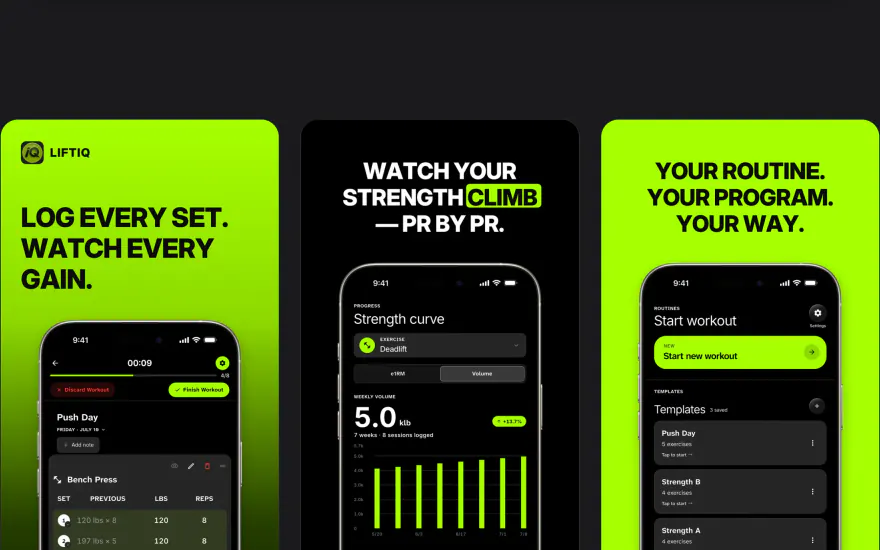
c.02Mobile appsNative-quality iOS and cross-platform builds. LiftiQ — our own training app, launching on the App Store — is built to the same standard we sell.
c.03Prebuilt systems (Automation Templates)If the problem is already solved, skip the ground-up build: working agent stacks, ops pipelines, and full kits designed to buy and run yourself. First drops are in development — when they ship, you buy once and get a year of updates as the underlying models change, renewable after.preview templates →
c.04Proof in productionWe run our own products on this approach. LiftiQ ships updates every release; Social OS is still in build, shipping the whole way through. Same stack, same standard as client work.
c.05AI-assisted maintenanceWe use AI to shrink the maintenance burden — dependency checks, test generation, the ops work nobody wants — with an operator reviewing everything that ships. The point isn't "we deploy LLMs." The point is the upkeep cost goes down, not up.
c.06Documentation & deploy pipelinesThe codebase, the pipeline, the docs — all chosen so a future engineer, or a future you, can pick them up without us in the room. Keeping us in the room is a choice, not a dependency.

5 yr

the test every choice has to pass

3

in-house product lines, same standard

2036

the year we still pick up the phone

03identity

We take the environments other consultants avoid

Ten years in SailPoint IdentityIQ for private-sector and commercial organizations — shipped as rules, connectors, and workflows, and documented so the next person doesn't start over.

sailpoint iiqbeanshellldapoidcscim

good fit

  • — private-sector and commercial orgs on IdentityIQ
  • — legacy stacks and tangled entitlements
  • — audit deadlines that aren't moving

not a fit

  • — identity platforms other than IdentityIQ
  • — checkbox reviews with no remediation budget
c.01Independent senior consultingDirect access to an engineer with ten years in SailPoint IdentityIQ. No account managers, no bench, no markup — the person on the call is the person in your environment.
c.02Custom connectorsApplication connectors for the systems without out-of-the-box support — including the legacy ones nobody wants to touch — so identity coverage actually reaches the whole enterprise.
c.03Joiner-mover-leaver workflowsLifecycle automation, in plain terms: when someone is hired, changes roles, or leaves, the right access appears and disappears on schedule — provisioning, role assignment, revocation, mapped to how your org actually works.
c.04Rules, tasks & integrationsBeanShell (IdentityIQ's built-in scripting) and Java rules for the business logic that doesn't fit the standard configuration screens, plus deep Active Directory and SQL integration for custom data sources and reporting.
c.05Compliance & governanceAccess certifications, policy violations, role mining, audit trails — governance built to stand up to a real audit, not to pass a checkbox review.
c.06Documentation that survives usEverything we ship gets documented so the next person doesn't start over. We work in tangled, legacy, real-compliance environments — and we leave them legible.

10 yr

in SailPoint IdentityIQ

100%

private-sector & commercial engagements

1

operator in your environment, end to end

// 04 — partnership model

How a partnership starts

Every project is scoped to become a multi-year partnership. We started in 2026, and we plan to still be here in 2036.

session://partnership
eternaldev --new-partnership
01 · scope (1 wk) — call + doc · fixed fee · credited
02 · build (4-8 wk) — weekly demos · real PRs · real envs
03 · partner (ongoing) — continuous partnership · sized to your system · maintained by us
// project-only work available · ask in scoping call

// which lane are you

individuals & solo operators

A system you buy outright

  • — Automation Templates — prebuilt systems to buy and run yourself
  • — buy once · a year of updates, renewable
  • — first drops in development · join the list

small & mid-size teams

The core lane

  • — designed as the starting point
  • — scoped to the outcome · priced per engagement
  • — continuous partnership after the first build ships

larger organizations

Scoped per engagement

  • — bigger builds and SailPoint identity programs
  • — same process — scope, build, partner
  • — legacy stacks, real compliance, private-sector and commercial

// how billing works

You know the number before anything starts

We price engagements to the outcome, not by the hour, and the figure lives in your proposal — not a public grid. The scoping doc names it before a line of the build is written, and you pay in stages as real work ships, never all up front.

Buying a packaged Automation Template is the one exception — a fixed product carries a fixed, public price. Bespoke work is scoped; products are priced.

session://billing
eternaldev --how-billing-works
01 · scope fixed fee · credited to the build (60 days)
02 · deposit signed scope starts the build
03 · milestones invoiced as demos ship · net 15
04 · partner monthly · continuous after launch
// real hosted invoices · the scoping fee is the only money up front
05faq

Asked on every first call

Straight answers, written down so the first call can be about your problem instead.

q.01How does pricing work?We start with a fixed-fee scoping sprint: one week, one call, one written doc that defines the work, the system it touches, and the price. The fee is credited toward the build if you start within 60 days, so you never pay twice. If the week concludes the work isn't worth doing — or isn't ours to do — we refund it and tell you what we'd do instead; the written scope is yours either way. The build is scoped and priced from that doc, to the outcome rather than by the hour, so you know the number before anything starts. After it ships, the next step on offer is a continuous partnership that operates and upgrades the system and aims it at the next bottleneck — optional, three months minimum, then month to month.
q.02Can we do a one-off project without the ongoing partnership?Yes. Project-only work is available — ask in the scoping call. We default to continuous partnership because the platforms under these systems change every few months, and someone has to keep things current. If that someone is your team, we hand off with documentation written for exactly that.
q.03How long does a build take?Scoping is one week. First builds typically run four to eight weeks, with a working demo every week — real PRs in real environments. The scoping doc sets the timeline before the build starts.
q.04Who actually does the work?One accountable operator — the person you talk to owns the codebase, designs the work, and reviews every line that ships. Some builds use supervised associates for portions of the work; you'll know when that's the case. We use AI heavily to accelerate the build and automate the maintenance work, and every line that ships is reviewed and owned by the operator. The automation does the work; an operator keeps it pointed at the right problem.
q.05What happens if we stop the partnership?Nothing dramatic. You keep everything — the code, the documentation, the deploy setup — and the system keeps running as-is. What stops is the upkeep: re-testing and upgrading as models and platforms shift, because that's the work the partnership covers. Restarting later is fine; the documentation is written so we, or anyone, can pick it back up.
q.06Who do you do identity work for?Private-sector and commercial organizations only — that's the full scope of the identity practice. Ten years of IdentityIQ work across Fortune-scale environments: connectors, lifecycle workflows, governance, audit prep.
q.07Do you work with individuals, or just companies?The consulting practice is built for businesses with a real bottleneck and the budget to match — that's where a hands-on engagement pays for itself. For individuals and solo operators, the better fit is Automation Templates: systems built to the same standard as our client work, designed to buy and run yourself. The first drops are in development — join the first-drop list and we'll tell you the moment they ship.
q.08We're not sure which offering we need. Where do we start?The contact form. A few sentences about the project is enough — the person who would do the work replies by email within one business day, and says fast if it isn't a fit. If it looks like a fit, we suggest a 20-minute call, then a one-week paid scoping that ends in a written plan and a fixed price. If a prebuilt system already solves it, we'll point you at the templates and save you the build.

Pick the one you need

We take on a few partners a year and stay for years. Consulting is for private-sector teams and serious founders; if you're solo, we'll point you at the templates. We reply within one business day, and we'll tell you quickly if it's not a fit.